Most American kitchens only scratch the surface when it comes to stocking an authentic Asian pantry. While the world of soy sauces, rice vinegars, and noodles feels vast, many still underestimate the incredible diversity and complexity behind these staples. Over 80 percent of home cooks admit to confusing or overlooking key regional ingredients. This quick guide sheds light on common misconceptions and reveals how a well-curated Asian pantry can open new realms of flavor, even for American home cooks.
Table of Contents
- Asian Pantry Defined And Common Misconceptions
- Staple Ingredients Found In Asian Pantries
- Popular Asian Pantry Categories Explained
- How Greek Consumers Source Asian Pantry Items
- Applications For Home Cooks And Businesses
Key Takeaways
| Point | Details |
|---|---|
| Asian Pantries are Diverse | An Asian pantry is not a uniform concept but a rich collection of ingredients that vary widely across different regions. Each ingredient contributes unique flavors crucial to specific culinary traditions. |
| Understanding Key Staples | Essential ingredients like soy sauce, miso, and fish sauce play fundamental roles in Asian cooking; recognizing their distinct characteristics enhances culinary authenticity. |
| Sourcing Trends in Greece | Greek consumers increasingly seek authentic Asian pantry items through specialized ethnic grocery stores and online platforms, catering to a growing adventurous palate. |
| Culinary Exploration | Both home cooks and professionals can elevate their dishes by creatively employing Asian pantry ingredients, paving the way for innovative recipes that blend traditional and modern flavors. |
Asian Pantry Defined and Common Misconceptions
An Asian pantry represents a carefully curated collection of ingredients essential for creating authentic flavors across diverse culinary traditions. Pantry basics encompass a strategic array of condiments, sauces, spices, and starches that transform ordinary meals into extraordinary culinary experiences. Unlike simplistic assumptions about Asian cooking, this specialized collection goes far beyond stereotypical interpretations.
Contrary to popular belief, an Asian pantry is not a monolithic concept but a nuanced assemblage reflecting incredible regional diversity. Fundamental ingredients typically include complex flavor enhancers like soy sauces, rice vinegars, chili pastes, and foundational starches such as rice and noodles. These components serve as building blocks for creating depth and authenticity in dishes spanning Chinese, Japanese, Korean, Thai, and Vietnamese cuisines.
Common misconceptions about Asian pantries often stem from oversimplification and lack of understanding. Many home cooks assume these ingredients are interchangeable or limited, when in reality, each sauce, paste, and spice blend carries unique characteristics crucial to specific culinary traditions. The diversity ranges from Japanese miso and Korean gochujang to Thai fish sauce and Chinese black vinegar – each ingredient telling a distinct cultural story through its flavor profile.
Pro Tip for Asian Pantry Success: Start small by investing in 5-7 versatile core ingredients like light and dark soy sauce, rice vinegar, sesame oil, chili paste, and dried noodles. These foundational items will dramatically expand your cooking repertoire without overwhelming your kitchen storage.
Staple Ingredients Found in Asian Pantries
Asian pantry staples represent a carefully selected arsenal of flavor-building ingredients that transform home cooking from ordinary to extraordinary. Essential ingredients go far beyond simple seasonings, serving as cultural bridges that connect traditional cooking techniques with contemporary culinary practices.
Foundational components typically include liquid flavor enhancers like soy sauce, rice vinegar, and sesame oil. Each of these ingredients brings unique characteristics to dishes. Soy sauce provides umami depth, rice vinegar adds tangy brightness, and sesame oil contributes a nutty, rich undertone that elevates simple preparations into complex flavor experiences. Additional staples often include coconut milk, oyster sauce, miso paste, and an array of dried noodles and rice varieties that form the backbone of Asian cuisine.

Understanding these ingredients requires recognizing their regional nuances. Japanese miso differs dramatically from Korean gochujang, just as Thai fish sauce carries a different profile compared to Chinese black vinegar. The complexity of these staples means home cooks must approach them with respect and curiosity, understanding that each ingredient tells a specific cultural narrative through its unique flavor composition.
Pro Tip for Ingredient Selection: When building your Asian pantry, prioritize quality over quantity and invest in small quantities of authentic, single-origin ingredients from reputable sources. This approach ensures maximum flavor and supports more genuine culinary exploration.
Here’s a quick reference to distinguish key Asian pantry staples by regional origin and culinary role:
| Ingredient | Primary Region | Main Culinary Role | Distinctive Flavor Note |
|---|---|---|---|
| Soy Sauce | China, Japan | Umami enhancer for sauces | Salty, savory depth |
| Miso Paste | Japan | Base for soups, dressings | Fermented, earthy, mildly sweet |
| Fish Sauce | Thailand, Vietnam | Salty seasoning for dressings | Pungent, briny, complex |
| Gochujang | Korea | Marinades and stews | Spicy, sweet, fermented |
| Oyster Sauce | China, SE Asia | Stir-fries and glazes | Rich, umami, slightly sweet |
| Rice Vinegar | China, Japan | Salad dressings, pickling | Mild acidity, gentle tang |
| Black Vinegar | China | Dipping sauces, braises | Deep, malty, aromatic |
| Sesame Oil | East Asia | Drizzling and finishing | Nutty, toasted, aromatic |
Popular Asian Pantry Categories Explained
Asian pantry categories represent a sophisticated framework of culinary ingredients that capture the incredible diversity of regional cooking styles. Pantry classifications typically encompass four primary groups: sauces and pastes, spices and seasonings, noodles and rice, and preserved goods – each serving a critical role in creating authentic flavor profiles across different cuisines.
Culinary foundations are built around essential condiment categories like chili sauces, fish sauces, vinegars, and oils. These liquid flavor enhancers provide depth, complexity, and regional character to dishes. Soy sauces alone demonstrate remarkable variation – from light Japanese varieties to thick Chinese renditions – each carrying distinct nuanced qualities that transform basic ingredients into sophisticated culinary experiences.
Beyond liquid seasonings, Asian pantry categories include dry goods that form the structural backbone of meals. Noodles represent an extraordinary spectrum of textures and compositions, ranging from delicate rice vermicelli to hearty wheat-based varieties. Rice similarly offers incredible diversity, with each grain type – jasmine, basmati, glutinous – bringing unique characteristics to different regional preparations. Spices and dried herbs further complement these foundations, introducing aromatic complexity that distinguishes one cuisine from another.
Pro Tip for Pantry Organization: Group your Asian ingredients by category and use clear, airtight containers with labels indicating purchase dates. This systematic approach prevents flavor degradation and helps you track ingredient freshness more effectively.
How Greek Consumers Source Asian Pantry Items
Asian food sourcing in Greece has undergone a significant transformation in recent years, reflecting the growing culinary curiosity of Greek consumers. Market trends indicate an increasing demand for authentic international ingredients, driven by expanding palates and a desire to explore global cuisines beyond traditional Mediterranean cooking.
Greek consumers now access Asian pantry items through multiple channels. Specialized ethnic grocery stores have emerged as primary destinations, offering curated selections of hard-to-find ingredients. Mainstream supermarkets have also responded to this trend, dedicating entire sections to international food products. Top 10 Ethnic Pantry Essentials demonstrate the growing sophistication of the Greek market, with online platforms playing an increasingly crucial role in making diverse ingredients accessible.
The purchasing behavior of Greek consumers reveals a nuanced approach to Asian pantry ingredients. Younger generations and urban dwellers are particularly adventurous, seeking out authentic products from specific regions rather than settling for generic alternatives. This trend has prompted both local retailers and online platforms to expand their offerings, providing more specialized and authentic Asian ingredients that cater to increasingly discerning tastes.
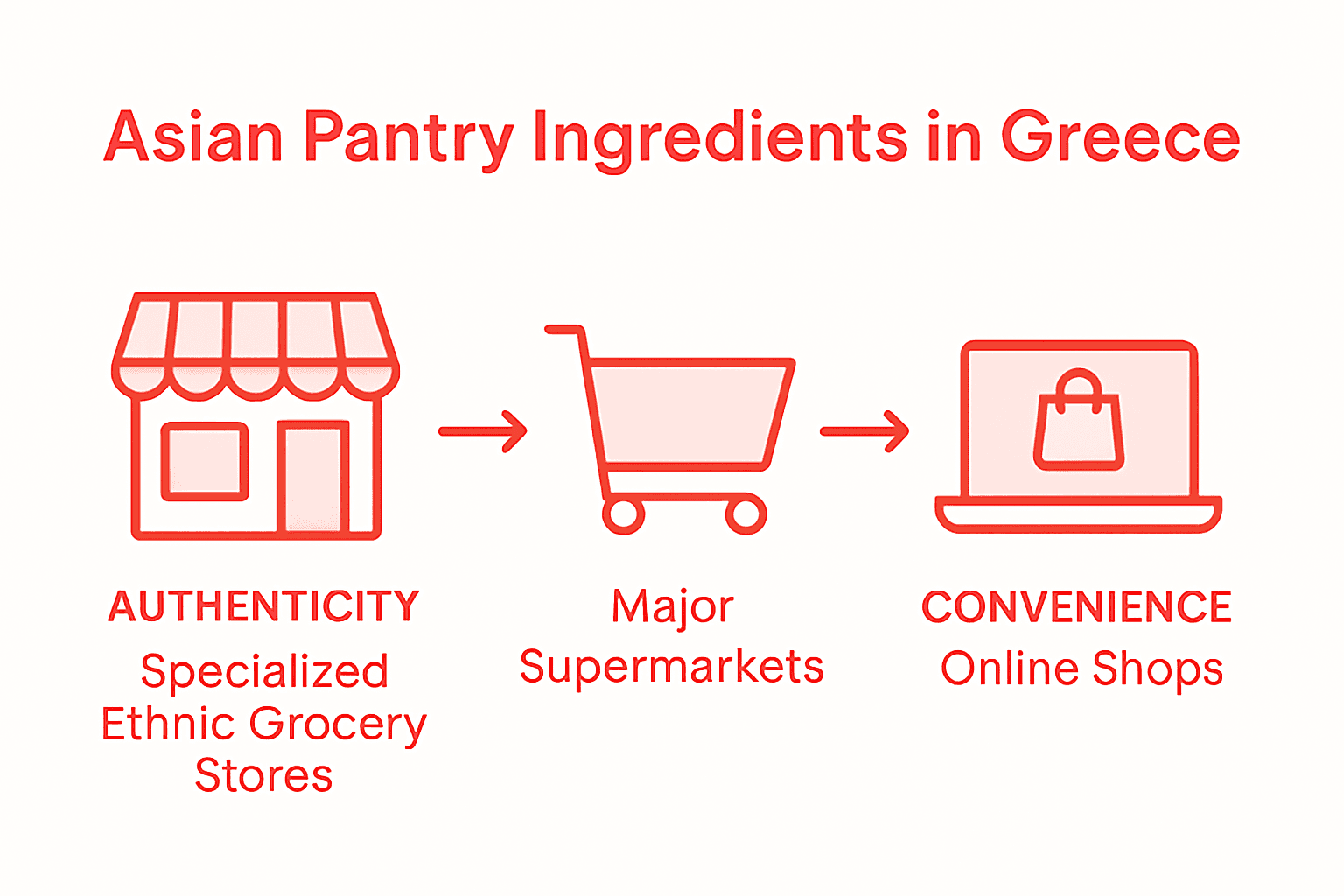
Pro Tip for Asian Ingredient Shopping: Research online specialty stores that offer detailed product descriptions and authenticity guarantees. These platforms often provide more comprehensive and genuine Asian pantry selections compared to traditional brick-and-mortar stores.
The following table presents a quick comparison of sourcing options for Asian pantry items in Greece and their benefits:
| Channel | Accessibility | Product Authenticity | Typical User Profile |
|---|---|---|---|
| Ethnic Grocery Stores | High in urban areas | Wide, often authentic | Food enthusiasts, expats |
| Supermarket Sections | Moderate nationwide | General brands | Everyday shoppers |
| Online Specialty Stores | Nationwide, 24/7 | Highly specialized, diverse | Young and adventurous cooks |
Applications for Home Cooks and Businesses
Asian pantry ingredients offer transformative potential for both home cooks and professional culinary enterprises. Culinary innovation represents a dynamic landscape where creativity meets authentic flavor, enabling individuals and businesses to explore global cuisine with unprecedented accessibility.
Experimental cooking techniques empower home cooks to transcend traditional recipe boundaries. Aspiring chefs can transform simple meals by incorporating ingredients like fish sauce, sesame oil, and chili pastes, turning everyday cooking into extraordinary culinary adventures. Restaurants and catering services similarly benefit from these versatile ingredients, crafting innovative menu items that reflect global flavor profiles and meet increasingly sophisticated consumer expectations.
Businesses across the food industry can leverage Asian pantry ingredients strategically. Restaurants can develop fusion menus that blend traditional techniques with contemporary interpretations, while food manufacturers can create product lines that appeal to adventurous consumers seeking authentic international flavors. Fresh and Flavorful Spring Rolls demonstrate how specific ingredients can inspire entirely new culinary experiences, bridging cultural cooking traditions with modern gastronomic trends.
Pro Tip for Culinary Exploration: Start with 3-5 core Asian pantry ingredients and practice creating simple dishes before attempting complex recipes. This approach builds confidence and helps develop an intuitive understanding of flavor combinations.
Unlock the True Potential of Your Asian Pantry with snfood.gr
Building an authentic Asian pantry is often challenging because sourcing quality ingredients like soy sauce, rice vinegar, chili paste, or gochujang can be time-consuming and confusing. Many home cooks and businesses face the problem of limited access to genuine, fresh, and diverse Asian staples that are essential for crafting flavorful dishes. You want to explore Asian cuisine confidently with ingredients that respect the unique regional flavors and depth described in the article but struggle to find trusted suppliers locally.
At snfood.gr, we understand your culinary goals and the desire to create authentic meals that truly capture Asia’s rich food heritage. Our platform offers an extensive range of authentic Asian pantry essentials carefully sourced and available for convenient online ordering and fast delivery across Greece. Whether you are stocking up on foundational items like sesame oil and miso paste or looking for specialty sauces and noodles, our selection supports your journey toward culinary mastery with trusted quality and variety. Experience the convenience of browsing our international food products, enjoy the benefits of wholesale solutions for your business needs, and never worry about running out of key ingredients again.
Ready to elevate your kitchen with genuine Asian pantry staples and expand your cooking horizons? Explore our curated assortment today at snfood.gr and bring the authentic flavors of Asia directly to your doorstep. Don’t wait because mastering authentic Asian cooking starts with sourcing the right ingredients right now.
Frequently Asked Questions
What is an Asian pantry?
An Asian pantry is a curated collection of essential ingredients that enhance the flavors of various Asian cuisines, including sauces, spices, and starches that allow for authentic culinary experiences.
Why is understanding Asian pantry ingredients important?
Understanding Asian pantry ingredients is crucial because each component carries unique characteristics and flavor profiles that contribute to authenticity in dishes. Recognizing their differences can significantly enhance your cooking.
How can I start building my Asian pantry?
Start building your Asian pantry by investing in 5-7 core ingredients such as light and dark soy sauce, rice vinegar, sesame oil, chili paste, and dried noodles. These versatile items will greatly expand your cooking options.
How do I differentiate between similar Asian sauces?
Differentiate between similar Asian sauces by focusing on their flavor profiles and culinary uses. For example, soy sauce is salty and umami-rich, while fish sauce is pungent and briny. Each sauce serves a distinct role in recipes, affecting overall taste and authenticity.